Friday, September 24, 2010
Colors
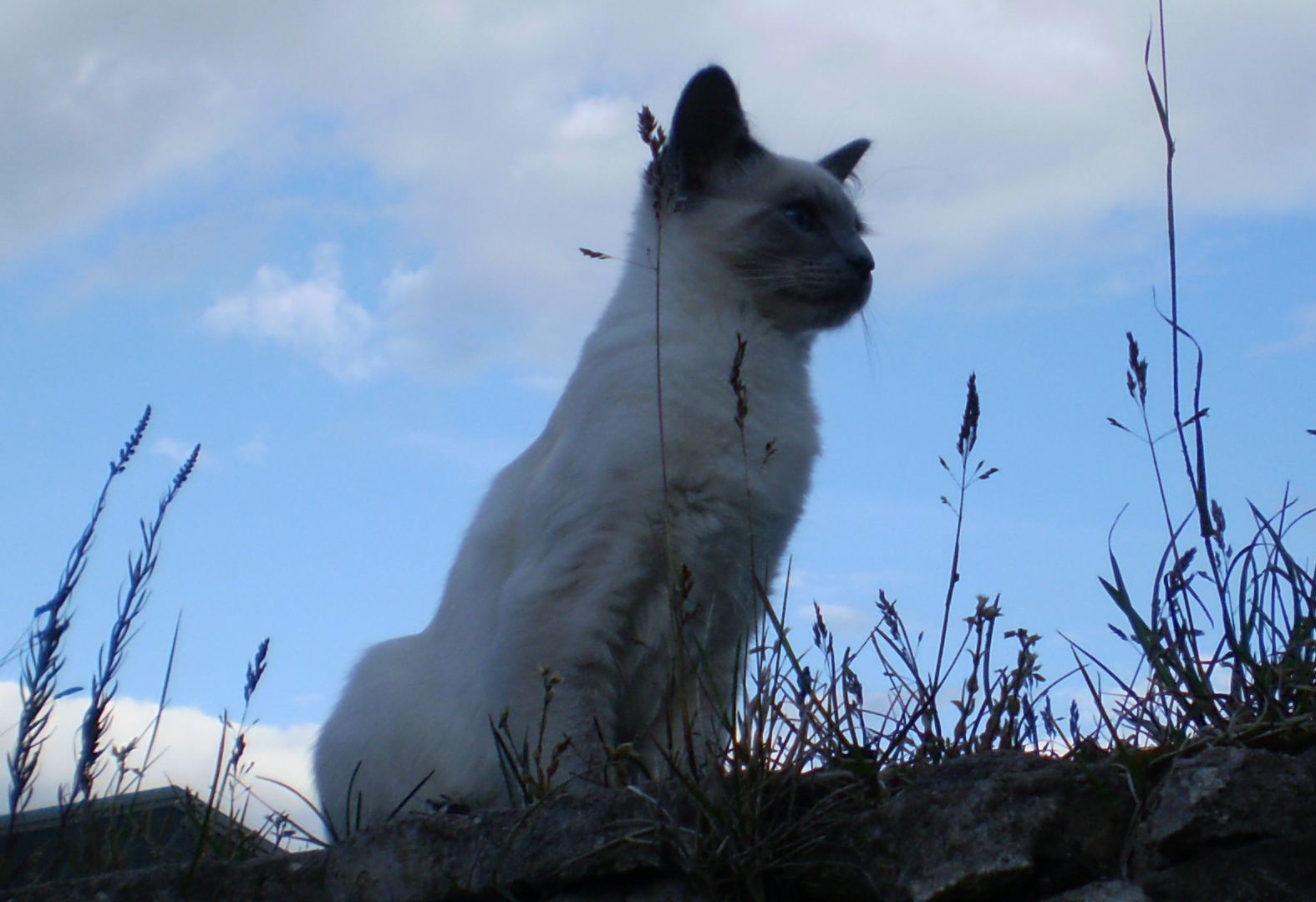
In most associations, the Balinese is accepted in a full range of colors, including the four traditional Siamese point colors of seal, blue, chocolate, and lilac, as well as less traditional colors such as red and cream, and patterns such as lynx (tabby) point and tortie point. However, in the Cat Fanciers' Association, the Balinese is only accepted in the four traditional Siamese colors; all other colors and patterns are considered Javanese.

Temperament
Like the Siamese, the Balinese loves attention; it is very playful and fond of human company. Similar to the ancestor "Siamese": the "Balinese" is a vocal breed which may vocalize for no apparent reason, albeit at lower volume than the Siamese. Balinese cats rarely scratch when irritated , but they moan and growl and sometimes hiss. Kittens may scratch playfully, but remember: kittens are young and don't know any better
Types
Like the Siamese, there are now two different varieties of Balinese being bred and shown - "traditional" Balinese and "contemporary" Balinese. The traditional Balinese cat has a coat approximately two inches long over its entire body and it is a sturdy and robust cat with a semi-rounded muzzle and ears. The traditional Balinese closely resembles a Ragdoll cat although they do not share any of the same genes or breeding other than having a partially Siamese ancestry. A "contemporary" Balinese has a much shorter coat and is virtually identical to a standard show Siamese except for its tail, which is a graceful silky plume. Like the Siamese, the Balinese has a long, slim body, wedge-shaped head, and vivid blue eyes. Its soft, ermine-like coat is short in comparison to those of other longhaired cats, and doesn't form a ruff.
Intelligence
The Balinese cat is rated the highest in intelligence of all the long-haired breeds, rated 9-10. In comparison: Persians are rated as 6 and Himalayans as 7.[1]
History
Though the coined name is misleading the "Balinese" is not a cat from Bali or any part of Indonesia(and Malaysia). It is not a natural occurring breed, but originates from human controlled breeding efforts.
The Balinese was originally registered as a "longhaired Siamese", and examples were known from the early 1920s. The occasional long-haired kittens in a Siamese litter were seen as an oddity, and sold as household pets rather than as show cats. This changed in the mid-1950s, when two breeders, Mrs. Marion Dorsey of Rai-Mar Cattery in California and Mrs. Helen Smith of MerryMews Cattery in New York, decided that they would commence a breeding program for the longhaired cats.
The name was chosen on subjective grounds: Mrs Helen Smith named the cats "Balinese" as she felt they showed the grace and beauty of Balinese dancers, and because "longhaired Siamese" seemed a rather clunky name for such graceful felines. The breed became quite popular after this, and a number of breeders began working on "perfecting" the Balinese appearance. This led eventually to the development of two entirely separate "strands" of Balinese cat - some owners prefer a traditional or "apple-headed" Balinese, while breeders and judges tend to prefer a more contemporary appearance. It is unknown whether or not Mrs Smith actually visited Indonesia.
Subscribe to:
Posts (Atom)